
Why One Thermogram Is Not Enough

Many people assume that one thermogram will give them all the answers they need. While a thermogram is an incredibly valuable tool for identifying patterns of inflammation and vascular activity in the body, its true strength lies in monitoring changes over time.
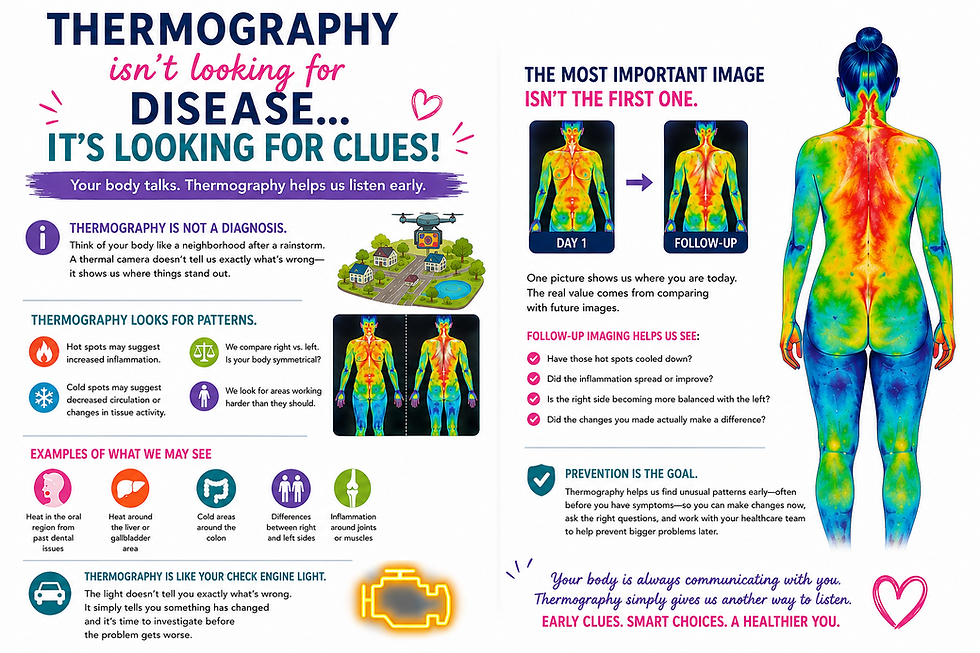
Your first thermogram establishes what we call a baseline. This baseline is simply a starting point, a snapshot of your body’s current thermal patterns on that specific day. Because every person’s thermal pattern is unique, that first image helps us understand what is normal for you.
The real insight comes when we perform a follow-up thermogram. By comparing the new images to your baseline, we can determine whether areas of heat or inflammation are improving, remaining stable, or becoming more active. These comparisons help provide a clearer picture of how your body is responding to lifestyle changes, therapies, injuries, stress, or underlying health concerns.
Without that comparison, we are simply looking at a single moment in time. Thermography is designed to be a monitoring tool, much like repeating blood work or checking blood pressure over time.
That’s why most thermography protocols recommend a follow-up study within 3–6 months after the baseline. This allows us to properly evaluate any patterns that were seen and determine whether they are resolving or require further attention.
Thermography is most powerful when used as part of a preventive health strategy, helping you track inflammation and changes in your body before symptoms appear.
Your baseline starts the story. The follow-up tells us where your health is headed.
Schedule your thermogram here: https://www.functionalwellnessandimaging.com/book-online


Comments