
Thermography Isn't Looking for Disease, It's Looking for Clues
One of the biggest misunderstandings about thermography is that people think it is looking for a diagnosis.
It isn't.
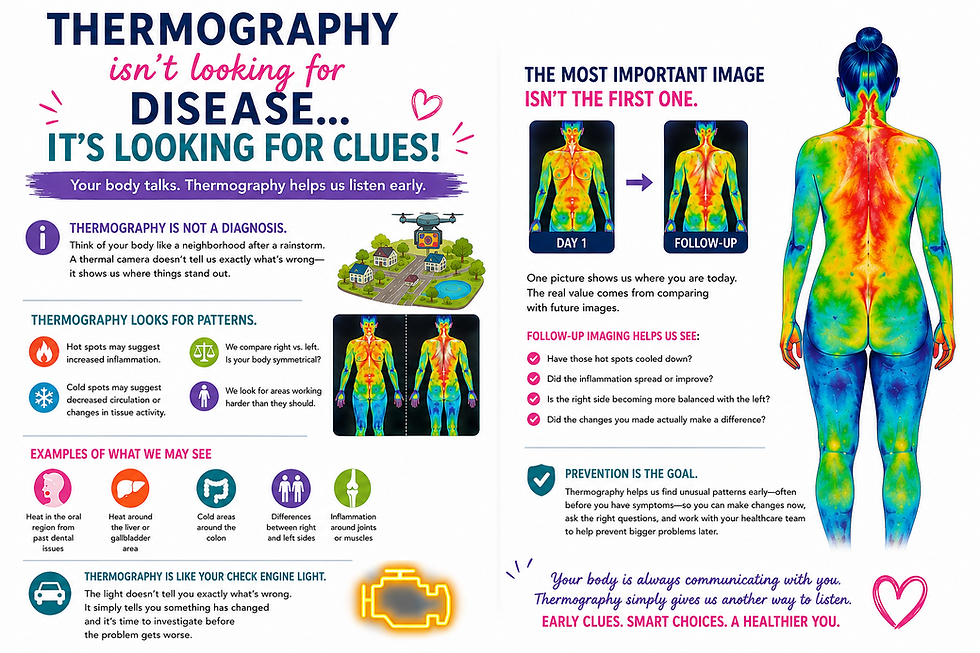
Think of your body like a neighborhood after a big wild fire. If a firefighter flew over in a helicopter with a thermal camera, they wouldn't be looking for the exact cause of every problem. They would be looking for areas that stand out. Where is it hotter than it should be? Where is it colder? Where doesn't everything match?
That's exactly how thermography works.
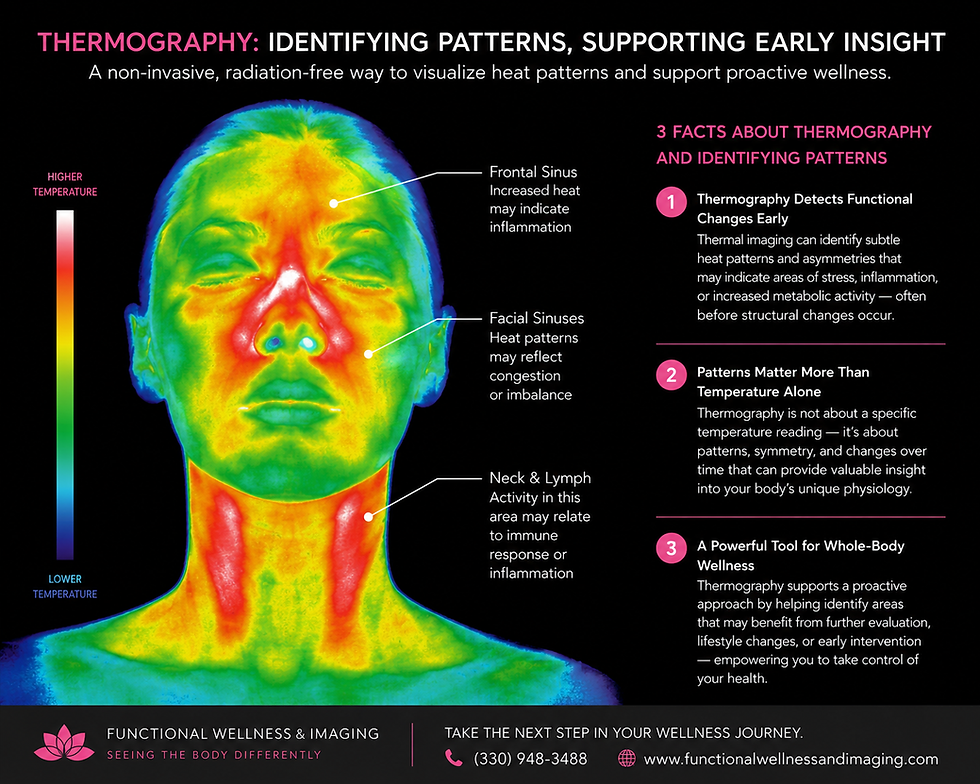
A thermogram looks for patterns.
Thermography looks for:
Hot spots that may suggest increased inflammation.
Cold spots that may suggest decreased circulation or changes in tissue activity.
Areas where the right side of your body doesn't match the left.
Regions that are working harder than they should.
For example, your images might show:
More heat around your mouth from old dental work or chronic dental inflammation.
Extra heat in the thyroid, liver or gallbladder area.
Cooler areas around parts of the colon.
Differences between one breast and the other.
Inflammation around joints or muscles.
None of these images tell us what the diagnosis is.
They simply tell us, "This area deserves attention."
That is a huge difference.
Thermography Is Like Your Check Engine Light
Imagine driving your car. One day the check engine light comes on.
The light doesn't tell you exactly what's wrong. It doesn't say, "Replace this part."
It simply tells you something has changed and it's time to investigate before the problem gets worse.
Thermography works the same way.
It gives you information early, often before you notice symptoms so you can begin asking questions, making healthy changes, and working with our staff to fix these issues and create optimal health.
The Most Important Image Isn't the First One
This is the part many people miss.
A baseline thermogram is only the beginning. One picture tells us what your body looks like today. The real value comes from comparing today's images with future images.
Have those hot spots cooled down?
Did the inflammation spread?
Is the right side becoming more balanced with the left?
Did the changes you made in your diet, lifestyle, dental health, stress levels, or exercise actually make a difference?
Without follow-up imaging, you never get those answers.
That's why I often tell clients:
"Don't spend your money on a baseline thermogram if you're not planning to come back for follow-up imaging."
The comparison is where the magic happens.
Prevention Is the Goal
Thermography is not about waiting until you're sick.
It's about paying attention to your body while you still have time to make changes.
When we find unusual thermal patterns early, you have an opportunity to ask questions, work with our wellness team, and make lifestyle changes that may help reduce inflammation before it becomes a bigger problem.
Your body is always communicating with you. Thermography simply gives us another way to listen.
And when you compare your images over time, you can actually see whether the changes you're making are helping your body move toward better balance.
That's why I believe thermography is one of the most valuable tools we have for prevention, not because it diagnoses disease, but because it helps us recognize patterns early enough to do something about them!


Comments